


I recently met a mother in Kado, Abuja, who quietly pays ₦8,000 per term for a school tucked inside an apartment block. Her child cannot attend the nearby public school because the classrooms have no roofs. This is how the average Nigerian family finds a list of underground schools in Nigeria – not by search engine, but by word of mouth in their community.
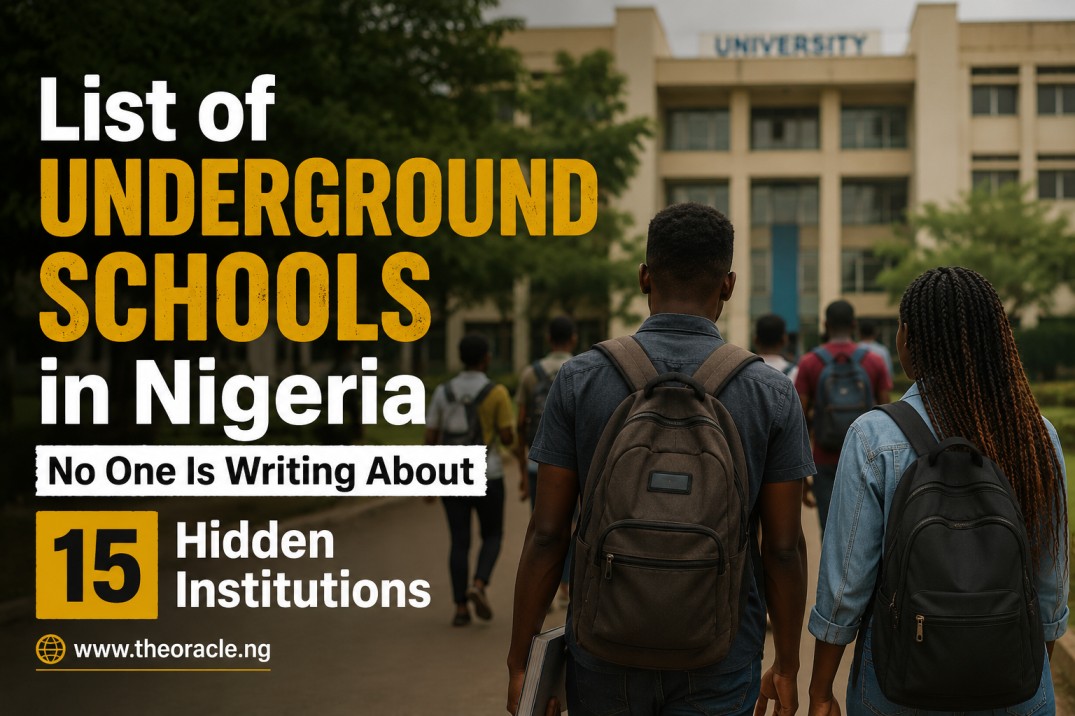
While the media focuses on official education policies, millions of children attend small, unregistered, and invisible schools that nobody writes about. This post provides the first publicly compiled list of 15 hidden institutions, complete with locations, key features, and actionable steps to find them near you.
What Actually Are Underground Schools in Nigeria?
These are not the internet scam training centers you see in bad news reports. The term “underground” simply means unregistered with state education authorities. Most operate in residential buildings, under trees, or inside converted shipping containers. They serve children that the public system has failed.
There is a clear downside. Because these schools exist outside the official system, no government body checks teacher qualifications, building safety, or curriculum standards. Your child might get an excellent education or a very poor one. You will have no recourse if something goes wrong.
15 Hidden Schools You Have Never Heard Of
Below is a list of 15 underground schools in Nigeria operating across different states. Each entry includes the location, what makes it unique, and the most urgent safety concern.
1. Atunfase Traditional School (Ikenne-Remo, Ogun State)
2. NFI School (Asokoro, Abuja)
Started in 2018 with just 14 children, this free school now serves 154 children from the Kpaduma Hills community. Children receive one free meal daily and full uniforms. The founder runs it entirely on donations from family members. Safety warning: the school operates from a modified residential building with limited emergency exits.
3. SchoolBox (Benue and Borno IDP Camps)
These are solar-powered classrooms built from recycled shipping containers. Each box holds up to 30 children and includes digital tablets, whiteboards, and proper ventilation. The programme started after the founder visited an IDP camp and found hundreds of children just sitting around with nothing to do. Safety warning: the containers can become extremely hot during dry season despite the built-in fans.
4. Tower College of Health (Ikorodu, Lagos)
This health science college operates from a remote community in Ikorodu. The proprietor also ran a blacklisted university in Benin Republic. Many parents choose this school because it offers courses at half the price of registered colleges. Safety warning: the National Universities Commission has specifically flagged this institution as illegal.
5. Destiny Junior Education Center (Makoko, Lagos)
Makoko has at least 32 private schools that the government does not recognise. Destiny Junior is one of them. The classrooms float on wooden stilts above the lagoon. Children learn math and science while water laps beneath their feet. Safety warning: the wooden structures have no fire safety measures.
6. Dansarai Primary School (Gezawa LGA, Kano)
This is a government school that has become an underground institution. Without a roof and with collapsed walls, teachers still hold classes in the open air. At night, local thugs use the same space. Parents send their children here because it is the only school within walking distance. Safety warning: children are exposed to bandits at night who sometimes stay after dark.
7. Kodo Primary School (Niger State)
The community built this school in 1976. The government took it over but then abandoned it. By 2021, the nursery and several primary classes no longer existed because the buildings had collapsed. Parents now teach children themselves under a nearby tree. Safety warning: the remaining walls could collapse at any moment.
8. Christian Charity American University (Nkpor, Anambra)
This university operates under a misleading name to attract students. The NUC has included it on the official illegal universities watchlist for years. Students attend because the admission requirements are lower than those of registered universities. Safety warning: certificates from this school will not be accepted for NYSC, jobs, or further studies.
9. Community High School, Oluke (Ijoko, Ogun)
This school has no functioning toilets. Teachers have not been paid in eight months. Yet children keep attending because their families cannot afford the transport cost to any other school. The roof leaks during rain so classes stop until the weather clears. Safety warning: there is no clean drinking water on the premises.
10. Methodist Primary School, Ekotedo (Ibadan)
The school was established over 40 decades ago. Today it sits abandoned and rotting on a wide expanse of land. However, a few brave teachers from the community still gather children in one partially standing room. They do this without permission from any education authority. Safety warning: the building has been condemned but remains in use.
11. Lifespring Academy (Kurudu, Abuja)
This school operates from a three-bedroom apartment where ten pupils of different ages share one room. The teacher has no formal teaching qualification and simply teaches subjects she “believes the children should know.” Safety warning: the apartment has a single entrance, which is a fire hazard.
12. University of Accountancy and Management Studies (Multiple Locations)
This illegal university has been listed by the NUC for more than a decade. It operates anywhere in Nigeria without a fixed address. You find it through newspaper ads or WhatsApp messages. Safety warning: the NUC has publicly stated that certificates from this school are completely worthless.
13. Royal University (Abakaliki, Ebonyi)
The NUC blacklisted this institution along with 57 others in 2024. Despite the warning, the school continues to admit students every semester. Parents choose it because tuition is ₦30,000 per session compared to ₦150,000 at registered universities. Safety warning: the school has been shut down by the government twice but keeps reopening.
14. Potter’s Legacy Ville Academy (Anka, FCT)
This academy operates without a fence or even a gate. Children walk directly from an open field into their classroom. The noise from nearby markets makes learning difficult. Safety warning: with no fence, children are vulnerable to kidnapping and roaming vehicles.
15. Thomas Adewumi Academy (Oko-Irese, Kwara)
This school markets itself as a leader in “secretive education”. It received its license in 2021 but then chose to operate without government oversight. The school claims this gives them curriculum freedom. Safety warning: because the school runs in secrecy, you cannot verify any of its claims independently.
How to Find Underground Schools in Nigeria Near You
Stop searching online. These schools do not advertise. Here is a checklist to locate them in your community.
Community Checklist
Visit the local market or the nearest public well. Ask the women there: “Where do the children in this area go to school?” That conversation will lead you to the unregistered schools faster than any government website.
Check the local mosque or church notice board. Many underground schools start as faith-based initiatives and post their schedules on religious bulletin boards.
Follow the children. Between 8am and 9am each morning, watch which direction children walk when they leave home. Do not follow them inside, but note the buildings they enter.
Talk to the neighbourhood security guard. Guards know every illegal activity in their assigned area, including unregistered schools. Ask politely, and most will share the information.
Ask the local food seller. Anyone who sells snacks or lunch to children knows exactly which schools are nearby and how much they charge per term.
The Vetting Formula for Hidden Schools
Before you enrol any child, use this simple 3-step template.
Step 1. Observe Morning Drop-Off
Stand at a distance and watch for 30 minutes. Do teachers arrive before the children? Do teachers look professional or do they come in casual clothes? Is there any adult supervising children who arrive early?
Step 2. Check Basic Safety
Look for three things: (a) a fence or gate that closes, (b) at least two exit doors from the main classroom area, and (c) no open electrical wires or exposed nails on furniture. If any of these are missing, walk away.
Step 3. Verify Teacher Knowledge
Ask the head teacher one simple question: “Can I see the curriculum you follow?” If they cannot produce a written document or name an approved national curriculum, they are likely unqualified. Ask another question: “What training have your teachers completed in the past year?” A blank stare means run.
A Personal Experience That Changed My View
In 2023, a friend asked me to visit her “school” in Kubwa, Abuja. She was running classes from her living room for eight neighbourhood children. She had no teaching certificate, no registration, and no business permit. But the children could read and write better than public school students twice their age. I helped her apply for official approval for three months. The government office never responded. That day, I understood why so many good people choose to run underground schools. The system makes legal operation nearly impossible for small providers.
Official Resource: For parents who want to verify if a school is registered, download the Nigerian Educational Research and Development Council (NERDC) app from Google Play Store. The app contains the approved national curriculum and can help you spot fake schools. The direct link is play.google.com/store/apps/details?id=ng.nerdc.curriculum.
The Truth Nobody Tells You
You will find a list of underground schools in Nigeria across every state. Some are excellent. Some are dangerous. The only way to know the difference is to physically visit multiple options and ask hard questions. Government registration does not guarantee quality, and lack of registration does not guarantee failure. Your own eyes and questions are the best verification tools.
Summary: This post gave you 15 hidden schools across Nigeria with specific locations and safety warnings, plus a checklist to find schools in your own community. Use the vetting formula before enrolling any child, and remember that an unregistered school can still provide good education if you verify it properly.