


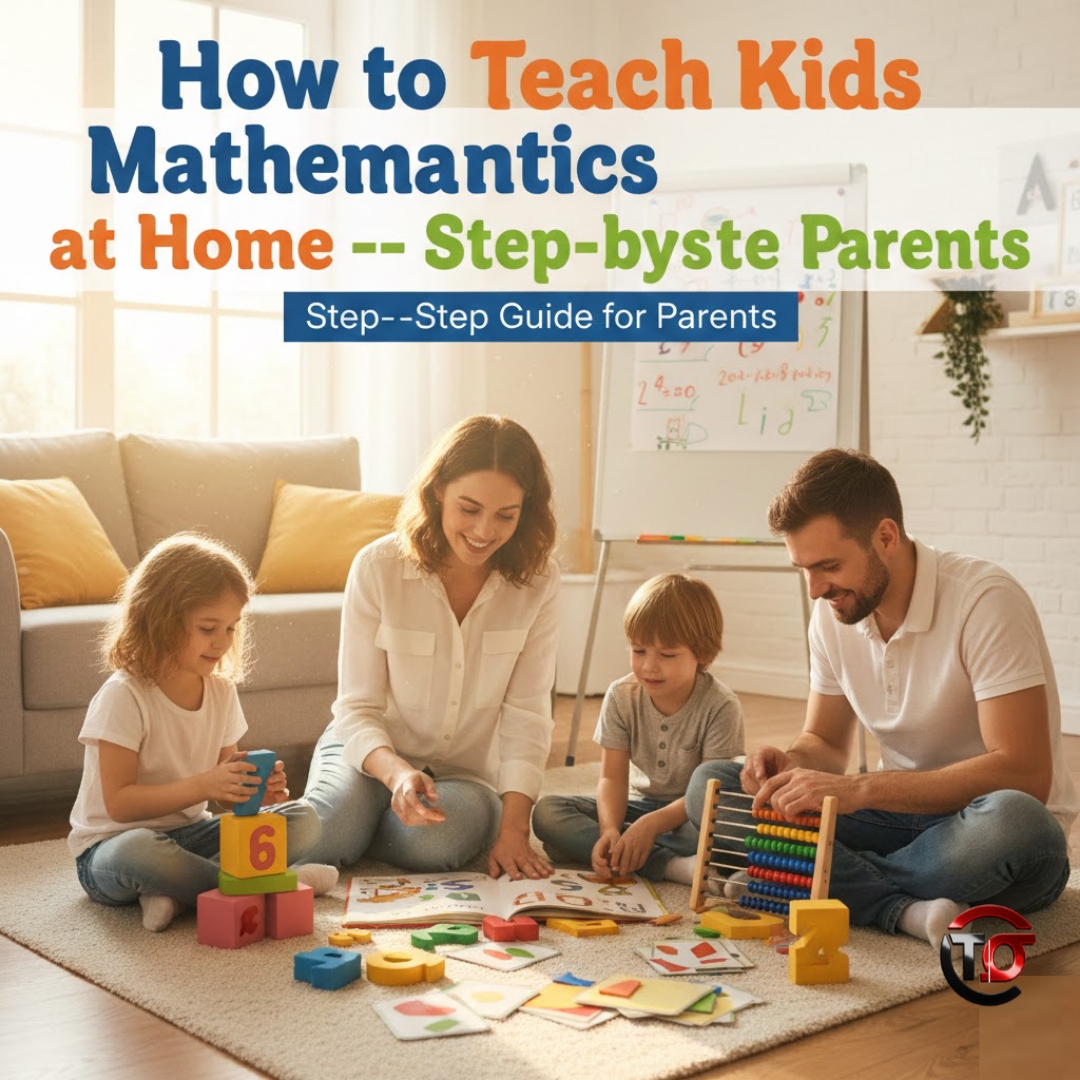
Home Maths Lessons: Easy & Fun Ways to Help Your Children Learn Mathematics at Home
Mathematics is often viewed as a difficult subject for many children. But with the right approach, environment, and support from parents or guardians, learning maths at home can become a fun, rewarding and confidence-building journey. Teaching children mathematics at home gives them time to learn at their own pace, revisit difficult areas, and see how abstract ideas link to everyday life.
In this article, we explore practical methods, daily routines, and creative activities you can adopt to help your child learn mathematics effectively at home — while building a positive attitude toward numbers and problem solving.
Why Teaching Maths at Home Matters
- Math becomes real and relevant. When children see maths used in everyday tasks — cooking, shopping, measuring, budgeting — they begin to understand its usefulness beyond school exercises.
- Pace and personal attention. School classes sometimes move too fast, or kids may feel shy asking questions. Home teaching lets you slow down, revisit basics, and tailor explanations to your child’s pace and style.
- Build confidence and a growth mindset. Regular support, encouragement, and patience at home can help children overcome fear of math and see mistakes as steps toward learning.
- Stronger foundation for future learning. A solid grasp of basic arithmetic, number sense, geometry and problem solving sets a strong base for advanced topics later.
How to Set Up a Good Home-learning Environment
Create a dedicated, distraction-free study area
Choose a quiet, well-lit place in your home where the child can focus — with minimal distractions. Keep maths tools handy: pencil, eraser, ruler, graph paper, counters (beans, buttons, blocks), etc.
Establish a consistent routine
Set aside regular, short sessions (for instance 10–20 minutes daily or every other day) for maths practice. Consistency helps build familiarity and eases anxiety. Short frequent sessions are often more effective than long but infrequent ones.
Encourage a positive and patient attitude
Praise effort, not just correct answers. Teach your child that mistakes are part of learning. Use encouraging words like, “It’s okay to try again,” or “Let’s figure this out together.” This fosters a growth mindset and reduces math anxiety.
Use everyday life to teach math
Turn daily chores and routines into maths lessons: measuring ingredients during cooking, counting money while shopping, calculating time or quantities, measuring lengths around the house, etc. This helps children see maths as something real and useful.
Fun and Creative Maths Activities at Home
Rigid drills and repetitive worksheets can make maths boring. Instead, try these fun, engaging methods — they’re more effective for learning and retention, and also more enjoyable for your child.
1. Hands-on manipulatives and visual aids
Use everyday items — beans, buttons, bottle caps — or purpose-made tools like counters, blocks, base-ten blocks, fraction strips, geometrical shapes, number lines or tangrams. These make abstract concepts concrete and easier to grasp.
For example:
- Use blocks or counters to represent addition or subtraction.
- Use fraction strips or cut pizza/chapati into halves, quarters to demonstrate fractions.
- Use shape blocks or tangrams to explore geometry, shapes, symmetry.
2. Games and puzzles
Turn maths exercises into games. Ideas:
- Simple board games with counting or money (or create your own).
- Scavenger hunts: Ask your child to find 5 round objects, or 3 items whose total length is more than 1 meter — then measure and add.
- Use pattern blocks or shape puzzles to explore geometry.
- Play mental-math challenges: ask quick addition/subtraction questions mentally, or do simple multiplication. This helps develop calculation speed and number sense.
3. Real-life math problems
Show children how maths applies in everyday life:
- When cooking: measure ingredients, adjust quantities, divide or double a recipe.
- While shopping: calculate total cost, change, discounts, estimate budgets.
- Time and scheduling: use clocks to teach time concepts, estimate durations, calculate time differences.
- Measuring objects or spaces at home: lengths, areas — helps with geometry and understanding units.
4. Worksheets and visual exercises (sparingly)
Worksheets and written exercises are useful — but use them after a hands-on activity or game, not as the sole method. This helps reinforce what was learned in a concrete/visual way.
5. Encourage discussion and reasoning
When your child solves a problem, ask them to explain how they got the answer. Encourage them to think of alternative ways to solve the same problem. This develops deeper understanding and reasoning, not just memorization.
Building Long-Term Maths Skills: Strategy & Mindset
Focus on conceptual understanding, not just procedures
Rather than just memorizing steps, help your child understand why a method works. For instance, use base-ten blocks or number lines to show addition, carrying over, place value, etc. When children understand the logic, they’re better prepared to handle new or more complex topics later.
Promote flexibility in problem-solving
Show them there’s often more than one way to solve a problem. Different methods help build flexibility, deeper understanding, and confidence.
Encourage consistency and regular practice
Make maths a regular part of the routine. Even 5–15 minutes daily practice goes a long way in building fluency. Consistency beats cramming.
Build a positive attitude toward mistakes and challenges
When a child makes a mistake, treat it as an opportunity to explore “why not?” instead of punishing or scolding. Encourage trial and error, praise persistence, and highlight improvements over time — not just correct answers.
Involve siblings, friends or peers
If possible, let your child learn with siblings or friends. Sometimes peer learning makes concepts clearer and more relatable. Collaboration builds confidence and reduces feelings of isolation.
Sample Weekly Plan for Home Maths Lessons
Here’s a simple weekly plan for a child (primary/elementary level) — you can adjust depending on age or level:
| Day | Activity |
|---|---|
| Monday | Short mental-math challenge: 5 quick additions/subtractions mentally + a counting game |
| Tuesday | Use manipulatives to explore a concept (e.g. blocks for addition/subtraction; fraction strips if age appropriate) |
| Wednesday | Real-life math: cooking or measuring items (kitchen, room dimensions, counting groceries) |
| Thursday | Math game: board game, scavenger hunt, shape/puzzle activity, or pattern recognition |
| Friday | Worksheet or written exercise (on concept practiced earlier) + reflection and explanation of solutions |
| Saturday | Peer/sibling learning or collaborative activity + fun maths story or math-related craft (geometry art, patterns, shapes) |
| Sunday | Review and celebrate wins: note progress, praise effort, discuss what was fun or challenging |
This mix of mental work + hands-on + real life + fun ensures balance, avoids burnout, and builds both skill and positive attitude.
Tips for Parents (Especially First-Time Home Teachers)
- Don’t worry if you don’t remember certain maths topics yourself — start from basics. Use manipulatives and real-life examples that make sense to you both.
- Be patient and flexible. Every child learns at their own pace. The goal is progress, not perfection.
- Mix fun and learning — keep sessions short, interesting, interactive.
- Use everyday life as your maths laboratory: shopping, cooking, measuring, time, money, etc.
- Celebrate small wins — build confidence and keep motivation high.
Final Thoughts
Teaching mathematics at home doesn’t have to be daunting. With a thoughtful approach — combining real-life examples, hands-on activities, games, consistent routines, and a supportive mindset — you can help your child build a strong foundation, confidence, and love for mathematics.
Remember: it’s not just about getting correct answers — it’s about understanding, reasoning, and seeing math as part of everyday life.