


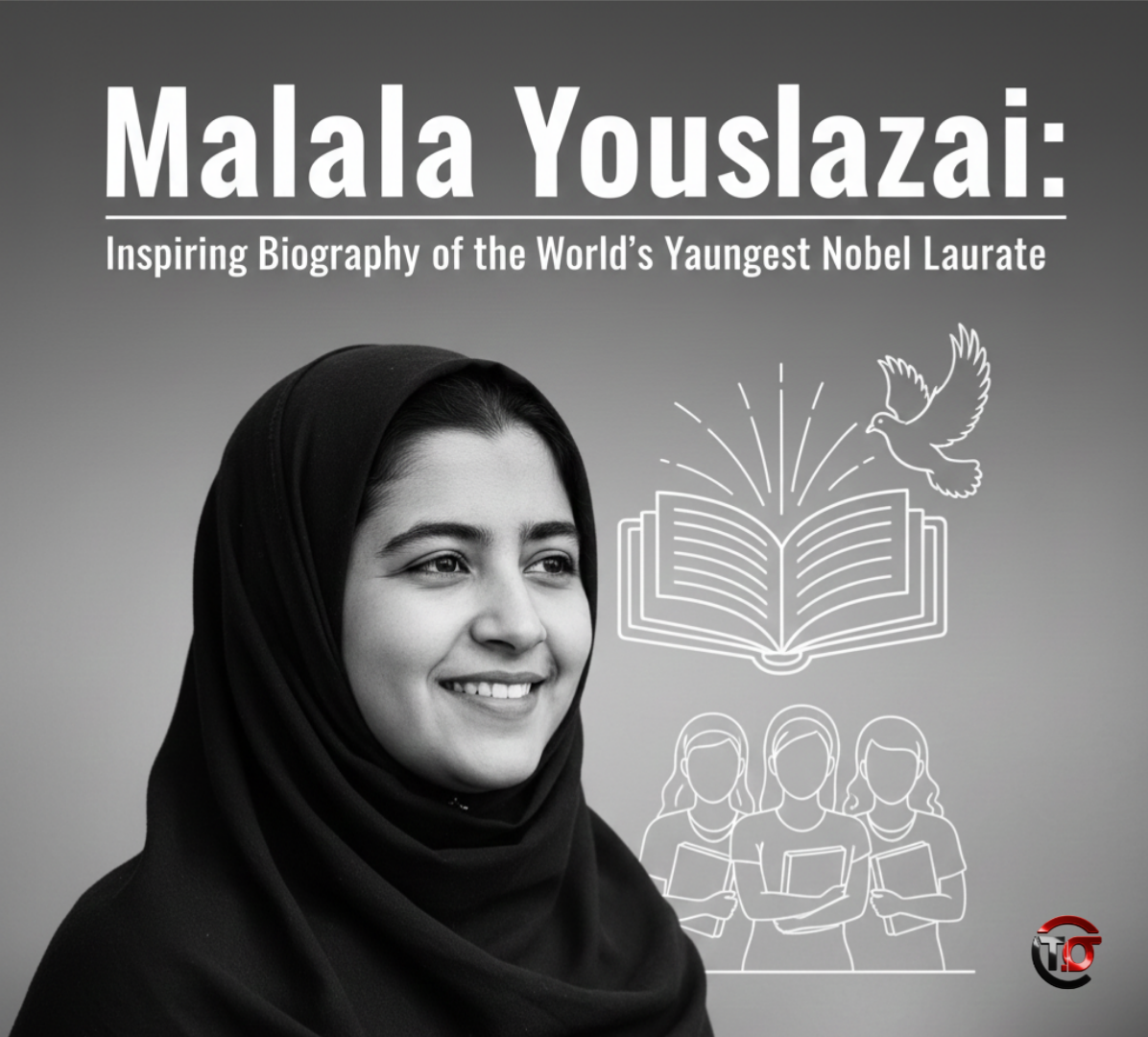
The Brave Journey of Malala Yousafzai: A Story of Courage and Education
Malala Yousafzai is one of the most inspirational figures of this generation. Known for her fearless advocacy for girls’ education, she rose from a small town in Pakistan to become the youngest Nobel Peace Prize laureate in history. Her story is not just about courage but also about resilience, hope, and the belief that education has the power to change lives.
Malala’s life reflects how one voice—no matter how young—can influence global conversations and inspire millions.
Early Life and Childhood
Malala was born on July 12, 1997, in Mingora, a town located in the Swat Valley of Pakistan. Her father, Ziauddin Yousafzai, was a teacher, poet, and strong supporter of education, especially for girls. He ran a school, and from childhood, Malala grew up surrounded by books, learning, and open discussions.
Unlike many girls in her community, Malala was encouraged to speak boldly and pursue her dreams. Her father treated her as an equal, allowing her to explore ideas freely. This environment shaped her confidence and planted the seeds of advocacy in her heart.
The Rise of the Taliban and Threats to Education
When Malala was around 10 years old, the Taliban took control of the Swat Valley. Under their rule, girls were banned from attending school. Music was forbidden, television stations were shut down, and public punishments became common.
Schools for girls were burned. Anyone who protested faced danger.
Malala refused to accept a life without education. She began speaking publicly about girls’ rights, even though she was still very young. Her courage made her a target — but it also made her voice stronger.
Becoming a Young Activist
At the age of 11, Malala began writing a secret diary for the BBC under a fake name, “Gul Makai.” In her writings, she talked about life under Taliban rule and how girls struggled to get an education.
Her diary became popular worldwide. She described walking to school in fear, hearing gunshots at night, and the sadness of seeing her friends forced to stay home.
As she continued speaking publicly, she became a symbol of resistance. News agencies interviewed her, and her speeches traveled across borders.
Malala dreamed of a world where girls could learn freely. But her growing fame came with danger.
The Attack That Shocked the World
On October 9, 2012, when Malala was just 15 years old, a Taliban gunman boarded her school bus and shot her in the head. The world froze. The attack was meant to silence her forever.
But instead of silencing her, it amplified her voice.
Malala was flown to the United Kingdom for urgent treatment. After several surgeries and months of recovery, she survived. Her recovery became a worldwide symbol of hope and determination.
A New Beginning in the United Kingdom
After regaining her strength, Malala and her family settled in Birmingham, UK. Instead of hiding or living in fear, she returned to school and continued her advocacy with even greater energy.
She co-founded the Malala Fund, an organization that fights for girls’ education across the world. Through her foundation, she has helped millions of girls access safe, quality education.
Malala transformed her pain into purpose.
Becoming the Youngest Nobel Peace Prize Winner
In 2014, at the age of 17, Malala received the Nobel Peace Prize, becoming the youngest recipient in history. She shared the award with Kailash Satyarthi, another child education activist.
In her Nobel lecture, she said:
“One child, one teacher, one book, and one pen can change the world.”
Her speech became a global message of hope and empowerment.
Education and University Life
Malala continued her studies in the UK. In 2020, she graduated from the University of Oxford with a degree in Philosophy, Politics, and Economics.
Her graduation symbolized everything she fought for — that every girl deserves the chance to complete her education and dream without limits.
Malala’s Global Impact
Today, Malala is not just an activist but a worldwide voice for equality. She continues to travel, speak, and advocate for girls in countries where education is still a challenge.
Her foundation supports schools, provides scholarships, trains teachers, and fights laws that prevent girls from learning.
Malala represents courage without anger, strength without hatred, and leadership without fear.
Life Lessons from Malala’s Journey
1. Education Is a Powerful Weapon
Malala’s life shows that education is the foundation of freedom. It opens opportunities, shapes societies, and helps people rise out of poverty.
2. Courage Doesn’t Depend on Age
She stood up to armed extremists at just 11 years old. Age is not a barrier to greatness.
3. Adversity Can Be Turned Into Strength
Instead of hiding after the attack, she stepped onto the world stage with greater determination.
4. One Voice Can Start a Movement
Malala’s courage inspired millions, proving that one person can influence global change.
5. Forgiveness Is Stronger Than Revenge
Despite being attacked, Malala often says she does not hate her attackers. Her message focuses on peace, not retaliation.
Why Malala’s Biography Still Matters
In many parts of the world, millions of girls still cannot attend school. Malala’s story is a reminder that the fight for education is not over.
Her biography inspires:
- students
- teachers
- leaders
- activists
- parents
- and everyday people
Her message encourages everyone to stand for justice, speak boldly, and believe in a better world.
Malala shows that bravery begins with a simple decision: to speak up, even when silence feels safer.