


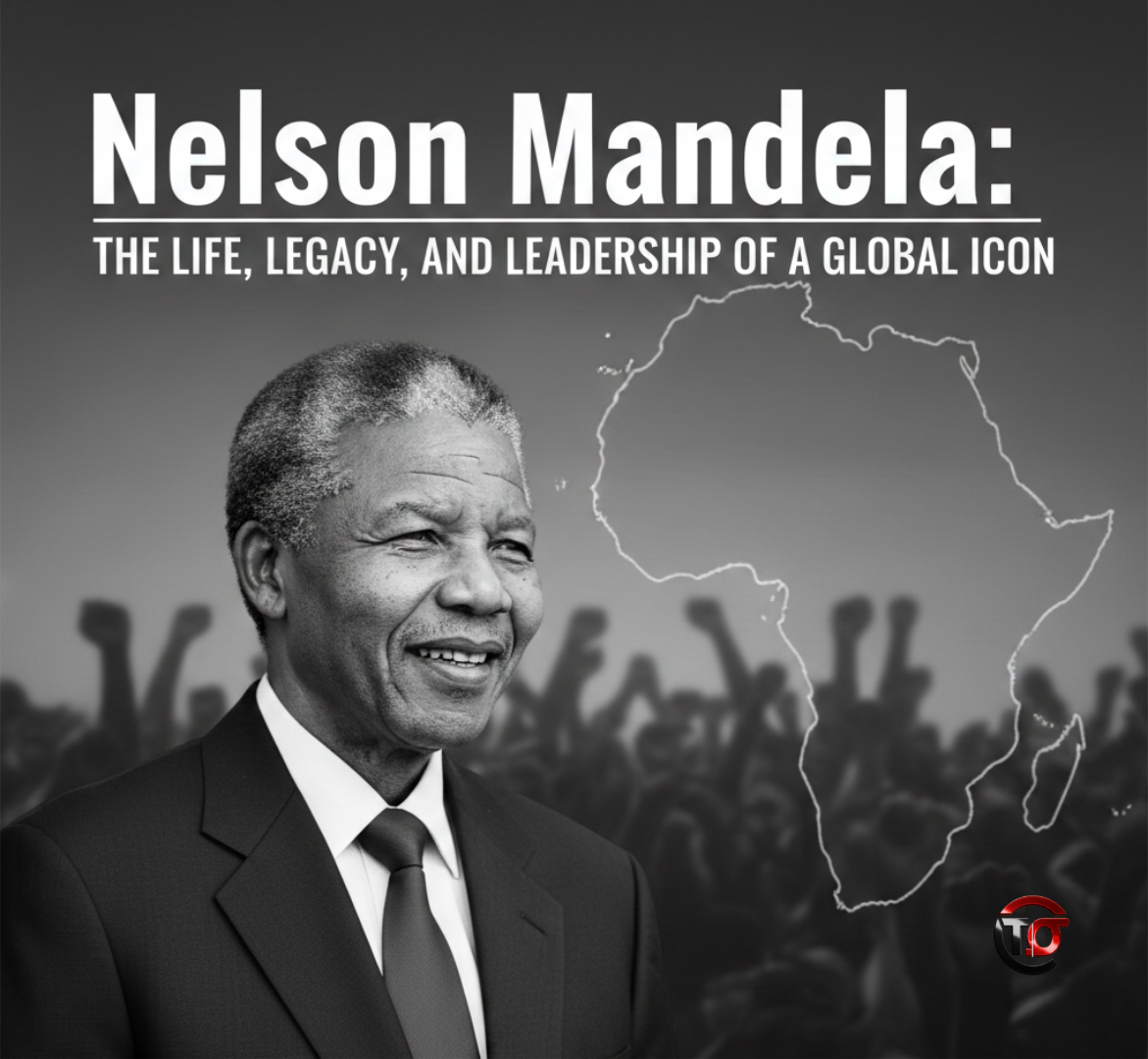
The Journey of Nelson Mandela: From Prisoner to President
Nelson Rolihlahla Mandela remains one of the most respected figures in modern history. His life journey—from a village boy in rural South Africa to a global symbol of peace, unity, and justice—continues to inspire millions across the world. Whether you know him as a freedom fighter, a political prisoner, or South Africa’s first Black president, Mandela’s legacy still impacts how nations view leadership, forgiveness, and equality.
Early Life and Childhood
Nelson Mandela was born on July 18, 1918, in the village of Mvezo in South Africa. His birth name, Rolihlahla, means “pulling the branch of a tree” or “troublemaker,” a name that seemed to reflect the strong, stubborn spirit he carried throughout his life. He grew up in a traditional Thembu royal family, where he learned early lessons about community leadership, respect for culture, and the importance of justice.
Though his early environment was simple, it shaped the strong values he carried as an adult: kindness, discipline, and courage. Young Mandela tended cattle, played with friends, and listened to stories of African warriors who defended their land. These stories planted the first seeds of resistance in him.
Education and the Search for Freedom
Mandela attended missionary schools where he encountered Western-style education for the first time. This was also where he was given the name “Nelson” by a teacher—a common practice during colonial rule.
He later studied at the University of Fort Hare, one of the few universities for Black Africans at the time. There, he began to experience the inequality built into the apartheid system. His political awareness grew, and he joined student movements calling for justice and reform.
Although Mandela faced challenges, including expulsion for joining a student protest, his desire for education and freedom did not weaken. He moved to Johannesburg, where he finished his degree and later studied law.
Mandela the Lawyer and Activist
Johannesburg exposed Mandela to the harsh reality of apartheid. Black South Africans were treated as second-class citizens, restricted in movement, land ownership, jobs, and even basic human rights.
Mandela joined the African National Congress (ANC), a political organization fighting against apartheid. He quickly became a leading voice among young activists who believed peaceful protests were not enough. Mandela helped form the ANC Youth League, which pushed for stronger resistance and mass mobilization.
In the 1950s, he co-founded the first Black-owned law firm in South Africa with Oliver Tambo. The firm gave free or affordable legal help to Black citizens facing unfair treatment under apartheid laws.
The Rivonia Trial and 27 Years in Prison
By the early 1960s, the apartheid regime had become even more brutal. Mandela and other activists decided to adopt stronger methods, including sabotage, to force the government to listen.
In 1962, he was arrested for leaving the country without permission and inciting workers to strike. Later, during the famous Rivonia Trial, he and his comrades were accused of plotting to overthrow the government.
Instead of denying his actions, Mandela delivered one of history’s most powerful speeches, declaring:
“I am prepared to die.”
In 1964, he was sentenced to life imprisonment. He spent 27 years behind bars—most of them on Robben Island under very harsh conditions.
Life in Prison
Mandela’s imprisonment was meant to silence him, but instead it made him a global symbol of resistance. While in prison, he studied, taught fellow inmates, and negotiated peacefully with the government from behind bars.
His ability to maintain dignity, courage, and forgiveness won the respect even of some prison guards. People across the world protested for his release. His name became a rallying cry for justice.
Freedom at Last
In 1990, after decades of local and international pressure, Mandela was released from prison. His walk to freedom became one of the most iconic moments in history.
Despite his suffering, Mandela did not seek revenge. Instead, he preached peace, unity, and reconciliation. He famously said:
“Resentment is like drinking poison and hoping it will kill your enemies.”
This approach helped prevent South Africa from falling into civil war.
South Africa’s First Black President
In 1994, South Africa held its first free and fair elections. Mandela won by a landslide and became the country’s first Black president.
As president (1994–1999), he focused on healing the nation, reducing racial tension, improving education, and building a new South Africa based on equality.
He also created the Truth and Reconciliation Commission, which helped the country confront past abuses without violence.
Life After Presidency
Mandela stepped down after one term—showing the world what honest leadership looks like. He spent the next years promoting peace, fighting HIV/AIDS, and supporting children’s welfare.
He received over 250 awards, including the Nobel Peace Prize (1993).
Mandela passed away on December 5, 2013, but his legacy continues to shine.
Mandela’s Lessons for Today
Mandela’s life teaches us:
- Leadership is service, not power.
- Forgiveness heals more than revenge.
- Courage is standing firm even when afraid.
- Education is one of the strongest weapons.
- Persistence can change history.
Why Mandela’s Biography Still Matters
From political leaders to young students, people still study Mandela’s life because he represents hope. His journey is proof that even in a world full of injustice, one person’s courage can inspire millions and reshape a nation.
Mandela turned pain into purpose. And his story remains a powerful reminder that no situation is beyond redemption.