


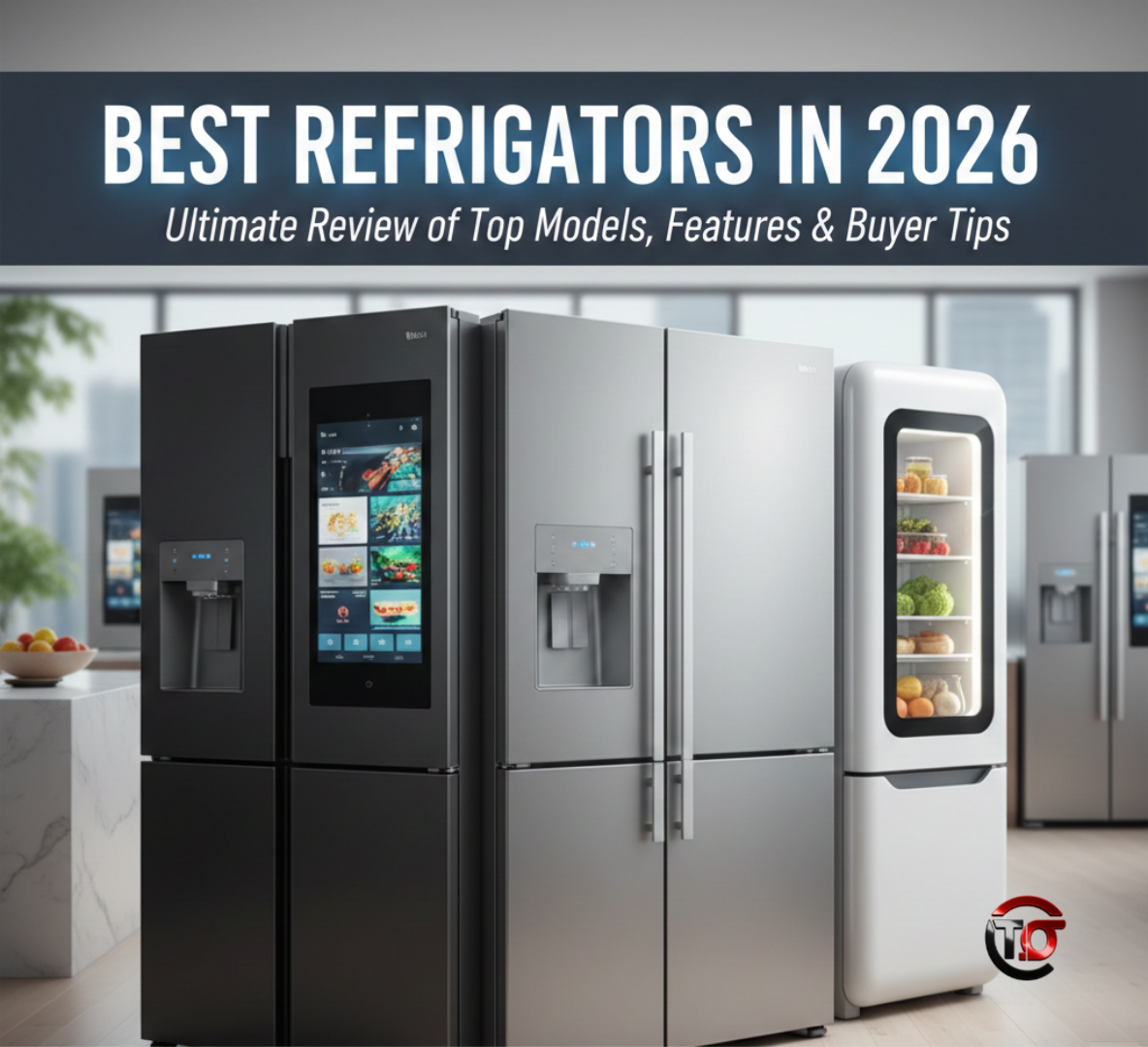
Top-Rated Fridges of 2026 – Smart, Energy‑Efficient Refrigerators Worth Buying
In 2026, refrigerators are far more than just “cold boxes” — they’re smart, energy‑efficient, feature‑rich appliances that aim to meet a wide range of lifestyles: from small families to tech‑savvy homes and energy‑conscious buyers. In this guide, we explore what makes a refrigerator “the best,” highlight top‑tier models leading the market, and weigh the pros and cons so you can make an informed decision.
What to Look for in a Modern Refrigerator (2026 Edition)
Before buying a refrigerator, especially in a world where technology and energy standards are advancing fast, it’s crucial to know what features matter most. Here are the most important factors to consider:
1. Energy Efficiency & Inverter Compressors
One of the biggest advances in refrigeration in recent years is the widespread adoption of inverter compressors. Unlike traditional fixed‑speed compressors that flip on and off, inverter compressors adjust their speed according to cooling demand — meaning they run more smoothly and efficiently.
Benefits of inverter refrigerators:
- Lower electricity consumption → reduces monthly power bills.
- Quieter operation (less noise), ideal for open kitchens or small homes.
- More consistent temperature control, which helps preserve food quality longer and reduces spoilage.
That said — inverter fridges typically cost more upfront. Maintenance or repair (especially outside urban centers) can sometimes be more complex than for basic, traditional models.
2. Smart Cooling Technology & Uniform Cooling
Modern fridges should cool evenly across all shelves and compartments. Features like multi‑airflow systems, dual evaporators, and advanced cooling zones ensure that vegetables, meat, dairy, and frozen items all stay at optimal temperatures.
Uniform cooling helps prevent spoilage, extends shelf life, and keeps food safe — a must for households with mixed storage needs (fresh produce, frozen goods, leftovers, beverages, etc).
3. Flexible & Customizable Storage Space
A good refrigerator adapts to your lifestyle. That means adjustable shelves, door bins, crisper drawers, convertible zones (fridge ↔ freezer), and ample capacity for your family’s needs.
Whether you have a small household or a large family — or if you buy in bulk — flexible storage helps you optimize space usage and reduce food waste.
4. Design, Build Quality & Kitchen Fit
The refrigerator’s external design — finish (stainless steel, matte, custom panels), door orientation (French‑door, side‑by‑side, top‑freezer, bottom‑freezer), depth (counter-depth vs standard), and size — impacts both aesthetics and usability.
A well‑designed fridge complements your kitchen layout, avoids overcrowding, and ensures doors and drawers open smoothly without bumping walls or cabinets.
5. Smart Features & Connectivity (Optional But Handy)
For many, refrigerators are evolving into smart home hubs. Some modern models offer touchscreens, Wi‑Fi connectivity, internal cameras, inventory tracking, food‑management apps, and even voice‑assistant integration. These features help with meal planning, grocery restocking, and making your kitchen more efficient overall.
That said — smart fridges tend to be more expensive and sometimes need a steady internet connection to maximize their features.
6. Reliability, Maintenance & Long‑Term Cost
A refrigerator runs nearly 24/7 — so you want something reliable with stable cooling, a robust compressor, good sealing, and low maintenance requirements. While modern features are great, sometimes simpler, well-built models deliver the longest effective life with fewer repair headaches.
Consider not only the initial price, but also electricity cost, potential repairs, and durability before making a final decision.
Top Refrigerator Models (2025–2026) Worth Considering
Based on recent expert reviews and comparisons, the following models stand out — they represent the cutting edge of what refrigerators can offer today, balancing performance, features, and value.
- Samsung — particularly their “Family Hub / French‑door” line, which combines large capacity, smart‑home integration, and reliable inverter cooling.
- LG — known for sleek, modern design and reliable cooling technology; good balance between storage and style.
- Whirlpool — offers flexible storage solutions and good mid-range performance for families seeking a balance between function and price.
- Bosch — excellent build quality and consistent cooling; ideal if you value reliability and minimalist design.
- More basic or budget‑friendly models (including top‑freezer or single‑door types) that use older but proven technology — good for small households, limited budgets, or areas with erratic power supply.
Remember: the best fridge for you depends on your household size, kitchen space, power considerations, and how much you value “smart” features.
Pros & Cons of Modern Refrigerators (2026)
Pros:
- Significantly reduced energy consumption and lower electricity bills — especially with inverter compressors.
- More consistent temperature control — better food preservation, less spoilage.
- Flexible storage options — accommodate bulk shopping, leftovers, large items, and varied food types.
- Smart features (in advanced models) — can integrate with home apps, track inventory, simplify meal planning.
- Quiet operation and smoother cooling cycles compared to traditional fridges.
Cons / Trade‑offs:
- Higher upfront cost — premium models (smart fridges, large capacity, inverter technology) tend to be expensive.
- Maintenance and repair can be more complex if compressor or electronic parts fail.
- Smart‑fridge features may require stable electricity and internet — not ideal where power/internet is unreliable.
- Large size and weight — may be difficult to install in small kitchens or apartments; needs space.
- For some models, water/ice dispensers and features may reduce internal storage space.
How to Choose the Right Refrigerator for You
When shopping for a fridge in 2026, here’s a quick decision checklist:
- Household size & storage needs — small family? Maybe a compact or mid‑size model. Large family or stock-up buyer? Go for bigger capacity, flexible storage.
- Electricity reliability & cost — if electricity is expensive or power supply is unreliable, invest in an energy‑efficient inverter fridge or simpler model.
- Kitchen size & layout — ensure fridge size, depth, door-opening clearance, and height fit your kitchen space.
- Budget vs features — prioritize core needs (cooling, energy efficiency, storage) over flashy features, unless you really need them.
- Maintenance & support availability — choose brands/models that have spare parts and service support in your region (important if you’re outside major urban centers).
- Long-term value — sometimes paying more upfront saves money over years via lower electricity bills, fewer repairs, and better food preservation.
Recommended Top Picks (2025–2026)
Below are some refrigerators widely regarded as among the best in the market currently — balancing features, efficiency, design, and reliability.
- Samsung Family Hub / French‑door line — best if you want smart features + large capacity.
- LG mid‑range to premium models — great balance of design, cooling, and storage.
- Whirlpool French‑door / side-by-side fridges — good for families wanting flexibility without overspending.
- Bosch premium refrigerators — for those prioritizing build quality, reliability, and understated elegance.
- Energy‑efficient inverter fridges (various brands) — ideal for those focused on low power consumption and quiet operation.
Final Thoughts
Refrigerators in 2026 are smarter, more efficient, and far more versatile than before. Whether you’re a small household in a modest flat or a large family stocking up weekly, there’s a fridge that fits your lifestyle — as long as you know what you need and what you’re willing to trade off.
If I were buying a fridge today: I’d prioritize inverter compressor for energy efficiency, good storage flexibility, and simplicity over gimmicks — unless I really needed smart‑home features. That balance tends to offer long‑term savings, reliability, and less headache.
With the right choice, you’ll get more than just cooling — you’ll get convenience, peace of mind, and better food preservation for years.