


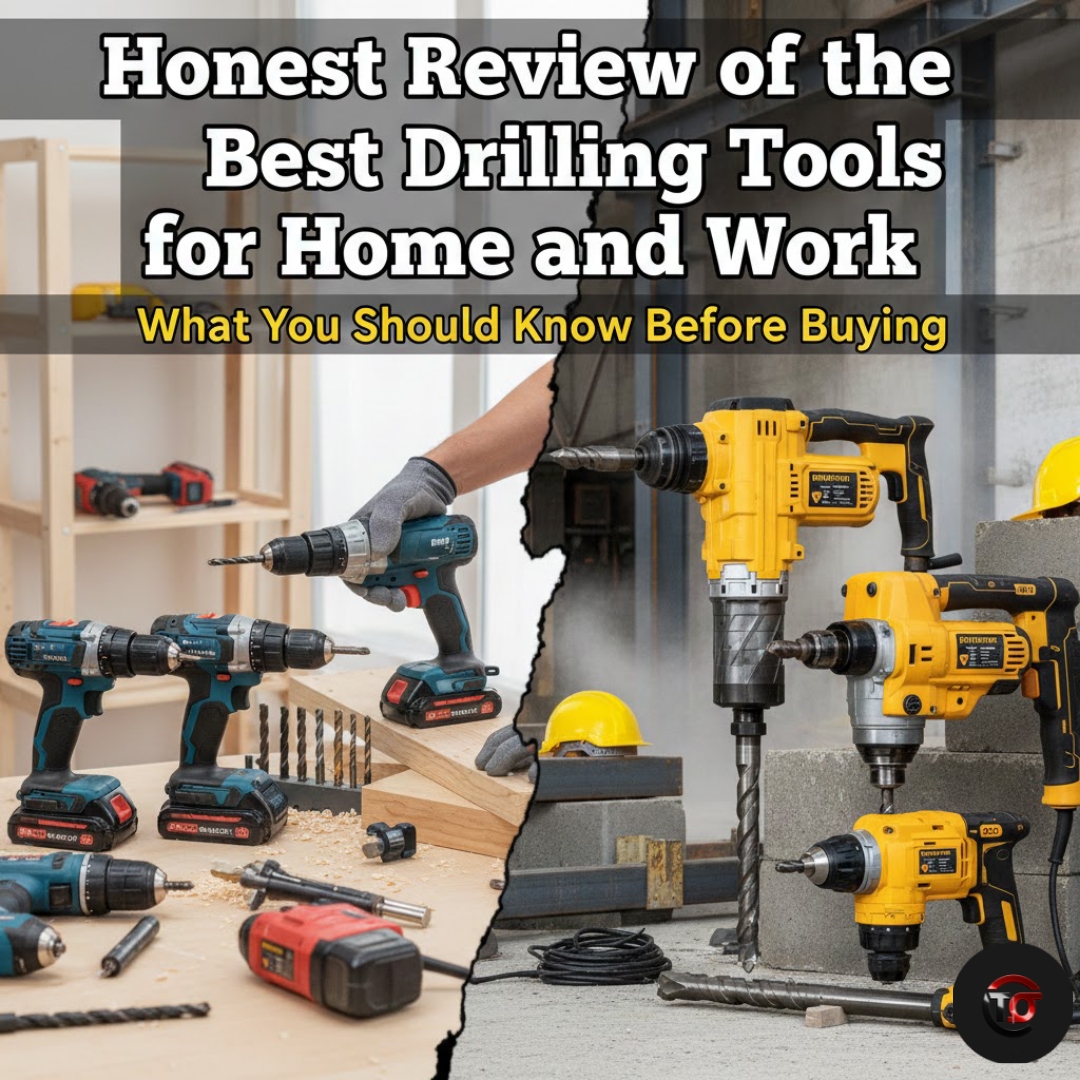
Top Drilling Tools for Home & Work: Honest Reviews, Pros, Cons & Buying Guide
Whether you are a homeowner doing small repairs, a DIY enthusiast, or a professional working on building and renovation — having the right drilling tool makes a big difference. A good drilling tool can save you time, reduce frustration, and ensure safety. A weak or poorly chosen tool, on the other hand, can damage materials, wear out quickly, or even cause injury.
This article aims to give an honest review — not of a single drill — but of what you should look for when choosing the best drilling tools for home and work. We cover the key features that matter, trade-offs (power vs portability, corded vs cordless), safety and ergonomics, and how to match a tool to your actual needs. By the end, you’ll know how to pick a drill that fits your work style and budget.
What Makes a Drilling Tool “Good”: Key Features to Consider
Before reviewing actual tools, it’s important to understand what makes a drill stand out. When readers (or buyers) evaluate power drills, these features consistently make the biggest difference.
• Power & Performance (Speed, Torque, Motor)
- The drill’s power (watts, voltage for cordless) or motor strength determines what materials it can handle. A more powerful drill can bore through wood, metals, maybe masonry — while weaker drills may be limited to light wood or metal.
- Adjustable speed and torque: Many quality drills allow you to control rotational speed and torque, which is vital depending on whether you’re drilling wood, metal, or masonry, or driving screws.
- Hammer/impact mode (on corded or combi drills) — needed if you plan to drill into concrete, bricks or other hard materials.
• Ergonomics & Comfort (Design, Grip, Size, Weight)
- A drill that feels good in your hand — balanced weight, comfortable rubberized grip, ergonomic shape — reduces fatigue during long work sessions.
- For regular home-use or light jobs, a compact, lighter drill may be better than a heavy-duty one.
• Versatility (Materials & Tasks)
- A “good” drill ideally works for different tasks: woodwork, metal, light masonry, and also driving screws. That versatility makes it a better value for home + work.
- Variable settings (speed & torque), reversible rotation, keyless chuck, quick-change bits all add to versatility.
• Build Quality & Durability
- A strong build (good housing, metal chuck, quality components) helps the tool last long. Cheaper drills may break or wear out fast under pressure.
- If cordless: a good battery (Li-ion), reliable charging system, and maintenance support/after-sales count.
• Safety Features & Ease of Use
- Useful safety or comfort features: overload protection, kickback protection, ergonomic handle, possibly built-in lights (for working in dark spaces), easy bit change (keyless chuck).
- A drill that’s easy to control (speed/torque), and easy to maintain, provides better long-term value.
• Price vs Value / Suitability to Your Needs
- Don’t always go for the most expensive drill. The “best” drill depends on what you need it for. Heavy-duty jobs require powerful drills; light home DIY may do fine with simpler, affordable models.
- Consider after-sales support, availability of spare parts/bits, and durability when evaluating value.
Which Type of Drill Suits Which Job?
Not all drilling jobs are the same — and the “best” drill depends on what you intend to use it for. Here’s a simple breakdown:
| Use Case | Recommended Drill Type / Features |
|---|---|
| Light DIY, furniture assembly, small home repairs, wood or light metal work, screw-driving | Compact cordless drill/driver, lower voltage (12–14.4 V), variable speed/torque, keyless chuck, lightweight & ergonomic |
| Regular home/work tasks: drilling wood, metal, screws; occasional heavier jobs | Combi-drill (corded or cordless) with adjustable speed, torque, possibly hammer mode |
| Heavy-duty work: drilling concrete/brick, masonry, metal frames, construction jobs | Hammer drill or corded drill with high power rating (watts or voltage), strong motor, high torque, durable build |
| Versatile all-in-one kit for varied jobs (home + work) | Mid-to-high range combi drill or hammer drill with versatile settings; good build, accessories, batteries if cordless |
Recommended Drilling Tools & Their Strengths / Weaknesses
| Drill / Type | Suitable For | Pros | Cons / What to Watch Out For |
|---|---|---|---|
| Milwaukee 2904-20 Hammer Drill (Cordless) | Medium to heavy work: wood, metal, occasional concrete — good for home and workshop use | Excellent power-to-weight ratio, compact size for tight spots, good torque and speed, wrist-protection auto-stop feature. | Not the absolute most powerful compared to big corded drills; battery-dependent (you need to recharge). |
| DeWalt 20 V MAX XR Hammer Drill (Cordless) | Versatile tasks: wood, metal, masonry, screws — good all-rounder for home + work | Very fast drilling performance, good speed/torque control, safety anti-rotation feature, built-in work light. | Heavier than some other cordless drills; can be more expensive. |
| Makita DHP458Z 18 V Combi Drill (Cordless) | DIY, home repair, wood/metal work, occasional masonry | Strong enough to handle wood, steel, even bricks; offers drill + hammer modes; adjustable grip and good ergonomics. | More expensive than cheap drills; some noise and it’s heavier compared to light DIY drills. |
| Bosch UniversalImpact 18 V Combi Drill (Cordless) | Light to medium jobs: wood, soft materials, household tasks | Affordable, easy to use, good torque settings and speed control, keyless chuck for quick bit changes, suitable for most DIY jobs. | Not ideal for heavy masonry or very hard materials (e.g. thick concrete). |
| Basic 20 V Cordless Drill / Driver Kits (e.g. entry-level from major brands) | Light household tasks, furniture assembly, hanging items, small repairs | Lightweight, easy to handle, good for occasional use, often come with bits & accessories — useful for beginners. | Less power and torque — may struggle with hard wood, metal, or masonry; chuck size may limit bit size. |
| DeWalt DWD115K Corded Drill | Heavy-duty tasks: concrete, masonry, hard wood — ideal for workshop or site work | High speed, consistent power (no battery needed), good for tough materials, reliable build. | Must be tethered to an outlet (less mobility), cord can get in the way, less convenience than cordless. |
| Corded Drill (general heavy-duty models) | Construction, masonry, long drilling sessions, heavy jobs | Reliable constant power; no dependency on battery; good torque and drilling strength even with dense materials. | Reduced portability; you need power outlet; cord may limit movement; can be heavy / less ergonomic. |
Who Should Pick Which Type of Drill
- For occasional home repairs, furniture assembly, hanging shelves, light wood or metal work: go for a lightweight cordless drill — e.g. Bosch UniversalImpact, entry-level cordless drill kits, or Makita combi drill.
- For regular home + workshop tasks (wood, metal, occasional heavier materials): a mid-range cordless hammer/combi drill (like DeWalt 20 V MAX XR or Milwaukee 2904-20) gives a good balance of portability and power.
- For heavy-duty work, masonry, concrete, construction or frequent long sessions: choose a corded drill or a powerful hammer-mode drill/driver or hammer drill — e.g. DeWalt DWD115K, or a strong cordless hammer drill with high torque.
- For beginners or first-time buyers: a budget-friendly cordless drill/driver kit with basic attachments is often enough for common household needs.
What to Check When Buying: Key Advice
- Match drill to your actual needs — don’t buy a heavy hammer drill if you only need it for occasional shelf-hanging.
- Ergonomics and weight matter — lighter drills are easier to handle for longer time, especially in tight corners or overhead.
- Power & torque vs portability — more power = more ability to drill hard materials; more portability = convenience for everyday home tasks.
- Corded vs cordless trade-offs — cordless gives mobility, but battery runtime and power limit; corded gives permanent power but ties you to outlet.
- Maintenance & safety — use correct bits, protect your eyes/hands, especially for metal or masonry; maintain the tool (clean, store properly).
What “Honest Review” Means: Realistic Expectations
When we say “honest review,” it doesn’t mean we praise a drill blindly. It means we evaluate both strengths and limitations — and help match drills to correct use cases. For example:
- A powerful hammer drill may be overkill, heavy or expensive for light home jobs;
- A lightweight cordless drill may not handle masonry or heavy metal drilling;
- Features like variable speed, torque settings, comfort grip, and durability matter more than just “brand name.”
Sample Picks: What to Look For (Based on Needs)
Here are hypothetical “ideal picks” depending on typical users — these illustrate how different jobs call for different drilling tools:
- For home repairs, furniture, light jobs — choose a compact cordless drill with variable speed and torque, ergonomic grip, and keyless chuck.
- For general home + workshop use (wood, metal, occasional masonry) — a combi drill with adjustable settings and moderate power, maybe with hammer mode.
- For heavy work (walls, masonry, building jobs) — go for a corded hammer drill or high-power drill with strong metal housing, high torque, and durability.
- For a “do-it-all” toolset — invest in a drill with good build quality, versatile settings, accessories (bits, batteries if cordless), and capacity for multiple materials.
Safety, Maintenance & Smart Use — What Many People Overlook
Even the best drill will fail or become unsafe if misused or poorly maintained. Here are critical do’s for safe, long-lasting use:
- Always read the manual and use correct drill bits (size, type) for materials.
- Wear eye protection, gloves (if appropriate), avoid loose clothes/jewellery, and secure the workpiece properly before drilling.
- For masonry or metal: use correct speed and pressure, and avoid forcing the drill — let the tool do the work.
- After each job: clean the drill and bits — dust, debris, and moisture can reduce life span.
- Check and maintain your drill: ensure chuck is tight, bits are not worn out, battery (for cordless) is well charged and stored properly.
Final Thoughts & Recommendations
If you’re shopping for a drilling tool today, here’s a quick decision guide:
- For occasional, light jobs around the house → choose a compact cordless drill: affordable, easy-to-handle, and enough for wood, fixing, drilling small holes.
- For regular home and workshop use → go for a combi drill (corded or cordless) with variable settings and decent power; more versatile.
- For heavy-duty, construction, masonry, metalwork → invest in a corded hammer drill or a high-power drill built for tough jobs — prioritize power, torque, durability.
- Always value ergonomics, safety, and proper maintenance — a safe drill today is a long-lasting drill tomorrow.
Conclusion
Choosing the “best drilling tool” is not about buying the most expensive or the most powerful — it’s about matching the drill to your real needs, understanding features vs tasks, and using tools responsibly with good maintenance and safety practices.
If you follow the guidance above — focusing on power, build-quality, ergonomics, and correct tool for task — you will get excellent value whether the drill is for simple home repairs or heavy-duty work.