


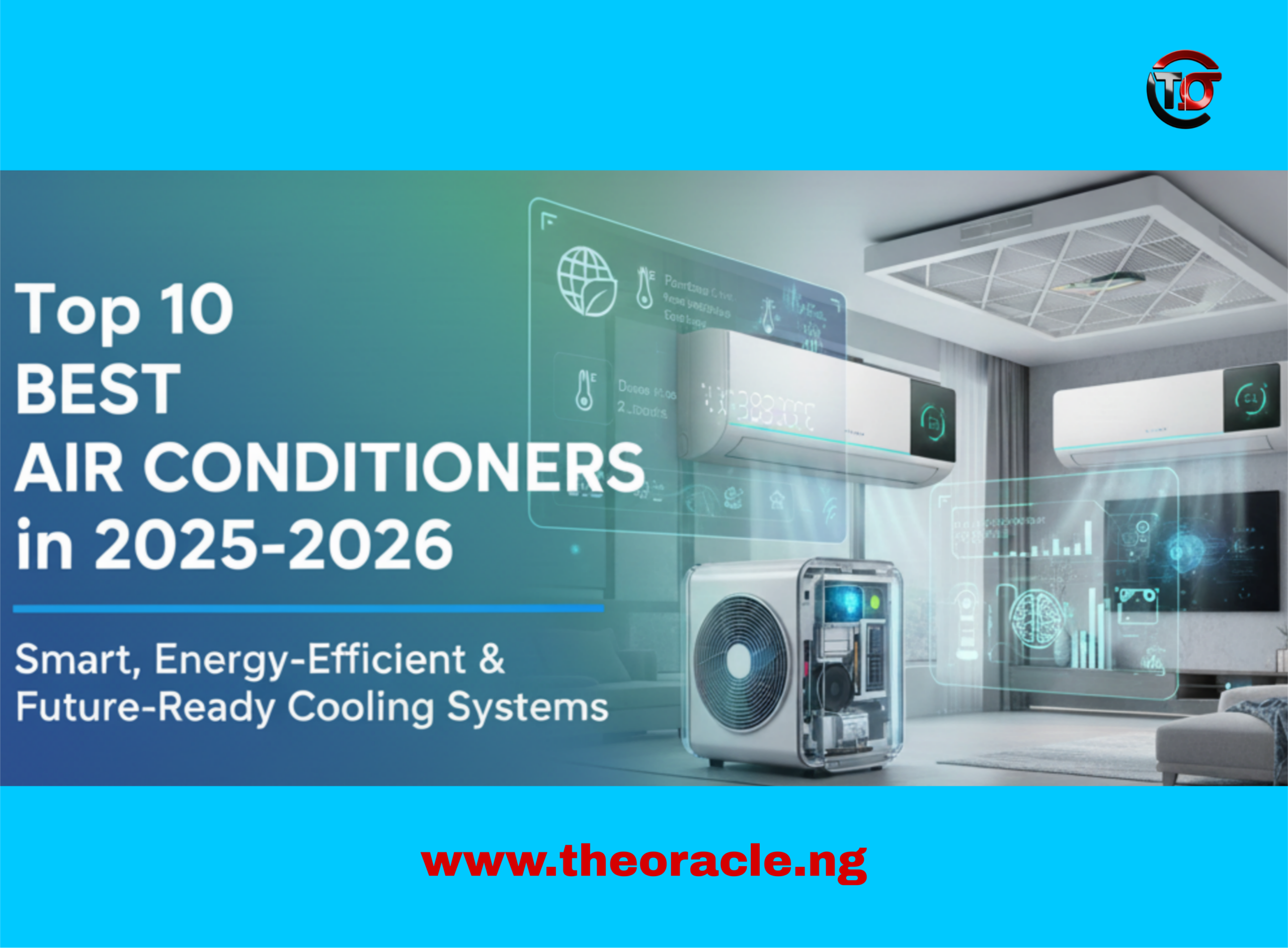
Top Air Conditioners in 2026: What Makes Them Best — And What to Expect in the Future
With rising global temperatures, increasing urbanization, and growing demand for home comfort, a good air conditioner (AC) is no longer a luxury — it’s a necessity. But not all AC units are equal. What made an AC “top-rated” five years ago may now be outdated. In 2025-2026, buyers aren’t just looking for powerful cooling — they want energy efficiency, sustainable operation, quiet performance, long-term value, and future-proof technologies.
This post explores what truly makes an AC one of the “best now,” and what innovations will define the “best future-ready” air conditioners. Whether you’re buying for a small apartment in Benin City or a larger home, this guide helps you make an informed decision — and stay ahead of the curve.
What Makes a “Best” Air Conditioner in 2025-2026
1. Inverter Technology & Energy Efficiency
- Inverter ACs adjust the compressor speed to match cooling demand. Unlike older models which repeatedly turn on and off, inverter compressors run continuously — slowing down when the room is cool and speeding up only when needed. This results in smoother temperature control, less energy waste, and lower electricity bills.
- Efficient ACs often offer 30–50% energy savings over non-inverter models.
- In regions with expensive or unstable power supply, energy-efficient units are not just eco-friendly — they’re economically smart.
2. Proper Cooling Capacity (Room Size Compatibility)
- An AC must match your room size and layout. A unit that’s too small will struggle; one that’s too large wastes energy.
- For a typical bedroom or small living room, a 1.0–1.5 ton split/inverter AC is usually sufficient; larger halls or multi-room spaces may require 2.0 ton or multi-split systems.
- Many “best” AC reviews organize models based on room size — so you don’t pay for power you won’t need.
3. Healthy Air & Smart Features
- Modern ACs often come with air filters, dehumidifiers, auto-clean functions, anti-bacterial filters, or even dust/allergen protection — ideal in dusty, humid climates or urban areas.
- Smart features like Wi-Fi controls, app scheduling, thermostat automation, or sleep/eco modes add comfort and long-term savings.
4. Quiet Operation & Comfort
- Because inverter AC compressors adjust their speed instead of switching on/off abruptly, they run much more quietly than conventional units — good for bedrooms and offices.
- Consistent airflow and temperature also avoids the “hot-cold” swings common with older ACs.
5. Durability, Maintenance & After-Sales Support
- Look for ACs with reliable copper coils, reputable brands, and solid warranties — this tends to improve longevity and peace of mind.
- Regular maintenance — cleaning filters, servicing coils, clearing debris from the outdoor unit — ensures optimal performance and extends lifespan.
- In markets where power surges or dust are common (like many areas in Nigeria), after-sales support and spare parts availability become major factors.
What to Expect From “Future-Ready” Air Conditioners
The air conditioner market is evolving fast. Here are some trends and features shaping the next generation of “top” AC units:
1. Eco-Friendly Refrigerants & Green Technologies
- New refrigerants (like R-32 or R-290) reduce environmental impact compared to older gases.
- Energy-saving modes and “smart inverter + eco cycle” designs reduce electricity consumption even further — a big win where power supply is costly or erratic.
2. Smart Home Integration & Remote Control
- ACs with Wi-Fi connectivity, app-based temperature scheduling, voice assistant controls, and remote diagnostics make living spaces smarter and more efficient.
- Predictive cooling: Some future ACs will learn your habits — pre-cool your room before you come home, adapt settings to outside temperature, or coordinate with solar or battery power.
3. Integrated Air Quality & Purification
- Beyond cooling: expect built-in HEPA-like filters, air purifiers, dehumidifiers, and perhaps even CO₂ sensors — crucial for urban or dust-prone areas.
- Smart ACs may also adjust airflow and humidity automatically to maintain optimal indoor air quality.
4. Flexible Power / Standby Modes & Off-Grid Readiness
- As more homes adopt solar power, battery backups, or mini-grids, AC makers are responding. Look out for ACs designed to run on inverters, variable voltage, or low-wattage modes, ideal for frequent power cuts.
- Convertible or multi-tonnage inverter ACs may allow scaling of cooling capacity depending on load, saving power when full cooling isn’t needed.
5. Modular, Multi-Room & Zoning Solutions
- Expect more “multi-split,” ductless mini-split or VRF systems that can cool multiple rooms independently — efficient for larger homes or multi-room apartments.
- Smart zoning allows customized temperature per room, reducing waste and enhancing comfort.
How to Choose the Best AC for Your Home (Especially in Nigeria)
| ❓ Question to Ask Yourself | ✅ What to Do / Look For |
|---|---|
| What’s my room size & layout? | Match tonnage (1.0–1.5 ton for small/medium rooms; ≥2 ton for large halls) |
| How reliable is my power supply? | Choose inverter AC, consider surge-protectors or stabilizers, maybe battery/solar-ready models |
| What’s my electricity budget? | Favor high-efficiency or energy-saving modes; smart scheduling helps |
| Is air quality important? | Look for ACs with filters, dehumidifiers, or air purification features |
| Do I need quiet cooling (bedroom/office)? | Prioritize inverter split ACs with low dB rating and smooth compressor |
| What is my maintenance capacity? | Choose reputable brands with local service & easy spare-parts access |
| Am I planning long-term use? | Invest in inverter + durable build + good warranty — a long-term cost saver |
Smart Advice Before You Buy
- Never rush by brand alone. Even top brands vary by model — drill down to specs: tonnage, energy rating, inverter technology, and cooling capacity.
- Check installation environment. Avoid placing indoor units in direct sunlight, behind heavy curtains or furniture — this reduces efficiency and lifespan.
- Prioritize energy efficiency over upfront price. Though inverter or smart ACs may cost more initially, lower running costs and longer life make them more cost-effective.
- Maintain regularly. Simple tasks — cleaning filters, ensuring unobstructed airflow, servicing coils — drastically extend the lifespan of your AC.
- Think long-term: power costs, after-sales support, electricity reliability, and future upgrades. A well-chosen AC can serve well for a decade or more if properly maintained.
Conclusion
In 2025-2026, the “best” air conditioners are those that combine efficient cooling, long-term savings, smart tech, and adaptability — not just brute cooling power. As electricity costs rise and climates get hotter, inverter-based, energy-efficient, and feature-rich ACs are becoming smart investments, not just luxuries.
The future is about intelligent, eco-friendly, and sustainable cooling — with ACs that adjust to our lifestyle, adapt to fluctuating power supply, and even improve indoor air quality. By prioritizing energy efficiency, proper sizing, maintenance and smart features, you’re not just getting cool air — you’re preparing your home for the future.
Happy cooling — and wise buying!