

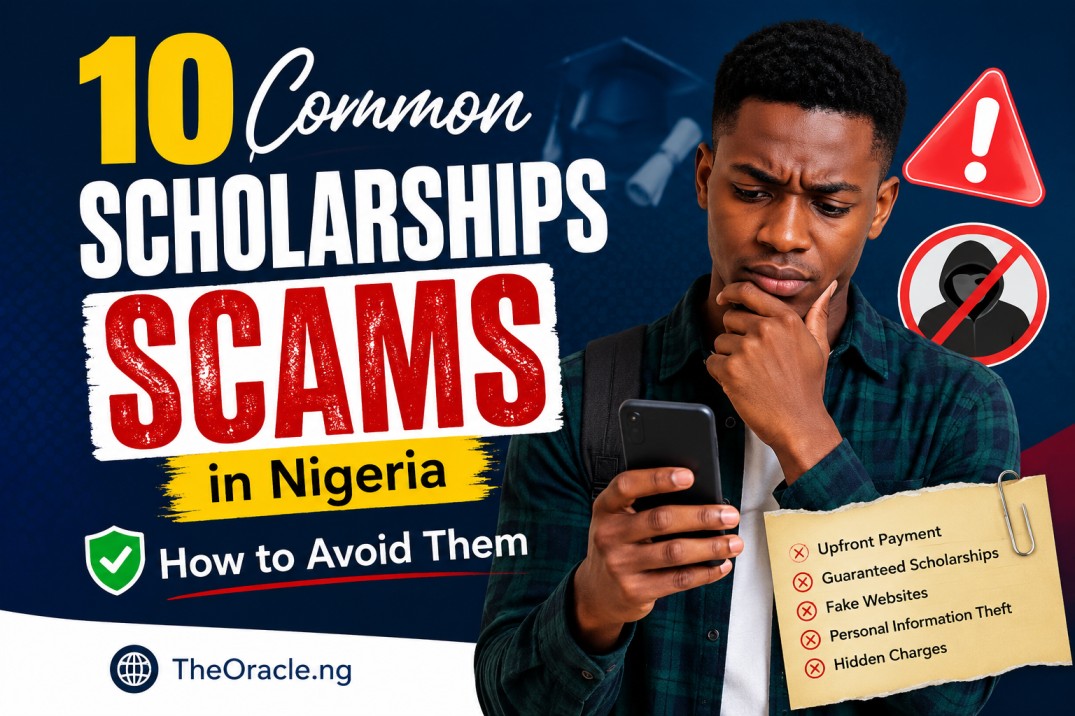

Every year, thousands of Nigerian students lose money to fake opportunities. The search for funding makes students vulnerable. I will help you identify the most dangerous scholarship scams in Nigeria. You will learn how to protect yourself. Some scammers build fake websites. Others send phishing emails that look real. I have seen students lose their savings because they trusted the wrong person. You can avoid this fate. You just need to know what to look for.
What Is a Scholarship Scam?
A scholarship scam is any scheme that pretends to offer financial aid for school. The goal is to take your money or steal your identity. Legitimate scholarships never ask you to pay for access. Real organisations do not guarantee awards. If something feels wrong, trust your gut.
Ten Common Scholarship Scams in Nigeria You Must Know
1. Fake Government Grant Pages
Scammers build websites that copy real government portals. These pages ask for your personal data and a small registration fee. The Federal Government of Nigeria has warned about fake N50,000 grant pages that steal bank details. One phishing website once lured users into giving their full names, phone numbers, home addresses, email addresses, bank names, and account numbers. Always apply through official government domains ending in .gov.ng.
2. Presidential Amnesty Programme Application Fee Fraud
You might see ads asking for money to apply for the PAP scholarship. This is one of the most active scholarship scams in Nigeria right now. The Administrator of PAP has publicly stated that the scholarship application process is completely free. Nobody should collect money for forms or faster approval. Scammers target parents and guardians with fake promises. If someone demands payment, walk away.
3. Fake NDDC Emails and Verification Exercises
The Niger Delta Development Commission has issued multiple alerts about fraudsters sending fake emails. These messages often come from addresses like nddcregistry@gmail.com. They invite you to a made-up document verification event. The NDDC has no connection to these schemes. Official NDDC scholarship processes run only through scholarship.nddc.gov.ng. Never respond to emails asking for money or sensitive information.
4. Foreign Scholarship and Visa Packages
A school proprietress in Akwa Ibom recently got arrested by the EFCC for this exact crime. She collected N3 million from a victim by promising a Canadian scholarship and visa. The victim only paid after getting a signed, notarised agreement. After the money was transferred, the suspect disappeared. Real foreign scholarships never require upfront payments. Do not trust anyone who asks for money before you get the visa.
5. Fake Cambridge University Programs
An impostor in Abuja cloned email addresses from Cambridge University. He told parents their children had access to an international scholarship scheme. He then collected money for registration, extra lesson teachers, and study materials. The suspect even forged an NYSC call-up letter to seem legitimate. He took about N1.3 million from unsuspecting parents. Always verify international scholarships by contacting the university directly.
6. Bait-and-Switch Bursary Schemes
One fraudulent website asked applicants to share a link on WhatsApp to “access” funds. The website collected personal information but delivered nothing. The site was registered overseas, not with the Nigerian government. No legitimate scholarship will force you to share links on social media. If you see a bursary that requires sharing or inviting friends, it is a trap.
7. Social Media Engagement Bait
Facebook pages sometimes promote scholarships with the Nigerian government logo. These offers promise money for thousands of youth. The goal is not to help you but to boost engagement. The posts are fake. They have no connection to any real programme. Check the official social media pages of ministries. Follow only verified accounts with the blue checkmark.
8. The Travel Agent Scholarship Package
A student named Victoria (not her real name) lost N1.7 million to a travel agent in Lagos. The agent claimed to help people get scholarships to Canada and the United States. He charged a N50,000 registration fee. Over four months, he asked for more money for admissions and visa processing. He gave her a fake admission letter from the University of Saskatchewan. When she called the university, they said no offer existed. He then cut off all communication. Do not use travel agents for scholarships. Apply through official school portals.
9. The Staged Admission Letter
Scammers sometimes create fake admission letters to convince you to pay more. These letters look real, but they come from clueless individuals. Always verify an admission letter by contacting the school’s admissions office directly. A quick email or phone call can save you millions.
10. The Too-Good-To-Be-True Scholarship
If a scholarship promises huge amounts with almost no requirements, it is almost certainly fake. Real scholarships have application processes. They do not give money to everyone who applies. They do not ask you to pay fees before receiving funds. If the offer seems too easy, it is a lie.
How to Identify Fake Scholarship Websites
Fake websites often have small spelling errors. They might use .com instead of .gov.ng. They often lack a physical address or working phone number. A real scholarship portal will have clear contact information and an official registration. Before you apply, search for the organisation name plus the word “scam.” You will often find warning posts from other students or agencies.
Do Not Trust the Indemnity Agreement
Some scammers sign notarised agreements to gain your trust. One victim in Akwa Ibom paid N3 million only after the scammer signed a legal-looking contract. The document meant nothing. The money still got stolen. A piece of paper does not guarantee honesty. Never pay money based on a signed agreement alone. Always verify the opportunity through independent sources.
What to Do If You Get Scammed
If a scammer has already taken your money, act fast. Report the case to the EFCC or the Police. Contact your bank immediately to freeze the account. You can also report cybercrime through the National Cybercrime Reporting Portal at report.ncc.gov.ng. The Nigerian Education Loan Fund (NELFUND) and other agencies have help desks that respond to scam reports. Some victims have recovered their money because they acted quickly.
One limitation of this advice is that it cannot make your bank reverse the transaction. Banks can freeze accounts, but they might not get your money back once it is gone. That is why prevention is your only safe option.
Your Scholarship Safety Checklist
Before you apply for any funding, run through this checklist. Tick every box before you share your personal data.
- Verify the official website. Look for .gov.ng, .edu.ng, or the organisation’s verified domain.
- Search for news or alerts. Type the scholarship name plus “scam” or “alert.” Check if any agency has warned against it.
- Read the requirements carefully. Real scholarships have clear eligibility criteria. They never ask for registration fees.
- Check the contact page. Look for a physical address and a working phone number. Call the number if possible.
- Confirm with the university or ministry directly. Use the official contact details on their main website. Do not trust contact info from the scholarship offer itself.
- Never share your bank login or BVN. No legitimate organisation needs this information for an application.
- Ask a trusted teacher or mentor. A second opinion can catch red flags you might miss.
How to Find Real Scholarships Safely
You can find real opportunities by going directly to official sources. The Federal Ministry of Education posts its scholarships on education.gov.ng. The NDDC publishes its programmes on nddc.gov.ng. For student loans, visit nelf.gov.ng. If you prefer using your phone, download the Boursepad app on Google Play. It connects students with verified sponsors and is a safer alternative to random websites.
Final Summary
The most dangerous scholarship scams in Nigeria use fake government pages, phishing emails, and fraudulent application fees. You can protect yourself by verifying every opportunity before you pay anything. Stick to official sources, use the checklist above, and trust your instincts. Your future is worth more than a scammer’s lie.