


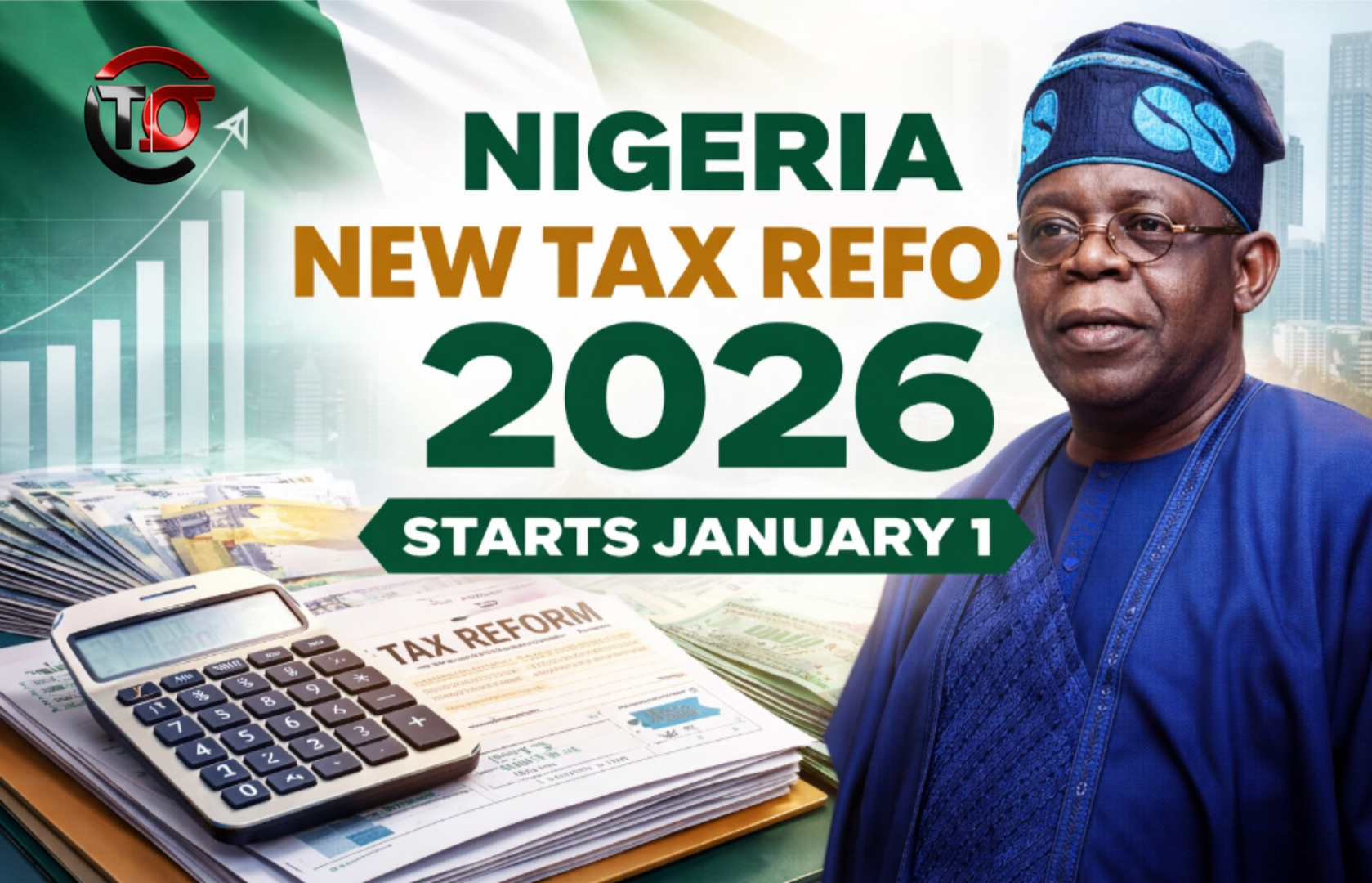

Nigeria New Tax Reform Begins 2026: What Changes Take Effect as the New Year Starts
Nigeria’s new tax reform officially commences in 2026, with implementation starting as the new year begins tomorrow. The reform is designed to modernize tax administration, expand the tax base, and ensure a fair, transparent, and digitally driven tax system that supports long-term economic growth.
How the Nigeria New Tax Reform Works
The Nigeria New Tax Reform 2026 operates through a structured and technology-driven approach aimed at simplifying tax compliance while strengthening enforcement.
1. Digital Tax Registration and Filing
Taxpayers—both individuals and businesses—are required to register and file taxes through improved digital platforms managed by tax authorities. This reduces paperwork, shortens processing time, and limits human interference.
2. Unified and Simplified Tax Structure
Multiple overlapping taxes are streamlined to avoid double taxation. This is especially beneficial to SMEs, which previously faced complex and sometimes conflicting tax demands.
3. Broader Tax Base, Fairer Contributions
The reform expands the tax net by capturing previously untaxed sectors of the informal economy, ensuring that tax responsibility is shared more equitably across income groups.
4. Stronger Compliance and Enforcement
With better data integration and monitoring, tax evasion becomes more difficult. Penalties for non-compliance are clearer, while compliant taxpayers benefit from smoother processes.
Practical Examples of How the Tax Reform Applies
Example 1: Salary Earner
A private-sector worker earning a monthly salary will have personal income tax assessed through a clearer and more automated system. Tax deductions become more transparent, and errors caused by manual calculations are significantly reduced under the 2026 framework.
Example 2: Small Business Owner (SME)
A small retail business previously paying multiple local and state taxes may now face a single, harmonized tax obligation. This reduces confusion, lowers compliance costs, and allows the business to plan finances more effectively.
Example 3: Digital Entrepreneur or Freelancer
A freelancer earning income online will now fall clearly within the tax system. Through digital reporting, income can be declared easily, ensuring compliance without excessive bureaucracy.
What This Means as 2026 Starts Tomorrow
With the reform taking effect from the first day of 2026, taxpayers are expected to begin aligning their financial records immediately. Early compliance helps individuals and businesses avoid penalties and benefit from the simplified processes introduced by the reform.
Why the 2026 Tax Reform Matters
Nigeria’s new tax reform strengthens government revenue, reduces dependence on oil, and improves funding for infrastructure, healthcare, education, and social services. By fostering trust and transparency, the reform supports economic stability from the very start of 2026.
Frequently Asked Questions (FAQ) – Nigeria New Tax Reform 2026
1. When does the new tax reform in Nigeria start?
The Nigeria new tax reform officially commences in 2026, with implementation beginning from the first day of the new year, which starts tomorrow.
2. Who is affected by the Nigeria New Tax Reform 2026?
The reform affects individual taxpayers, salary earners, small and medium-sized businesses (SMEs), large corporations, and digital entrepreneurs operating within Nigeria.
3. How does the new tax reform work?
The reform works by digitizing tax registration and filing, simplifying multiple taxes into a more unified structure, expanding the tax base, and strengthening compliance through improved monitoring systems.
4. Will small businesses pay more tax under the new reform?
Not necessarily. While compliance is stricter, many SMEs may benefit from simplified and harmonized taxes, reduced duplication, and clearer obligations, making tax payment more predictable and manageable.
5. How does the tax reform affect salary earners?
Salary earners will experience clearer personal income tax assessments, improved transparency in deductions, and reduced errors through automated and standardized tax processes.
6. Are online businesses and freelancers included in the reform?
Yes. Digital entrepreneurs, freelancers, and online service providers are clearly captured under the 2026 tax reform, with simplified digital reporting systems designed to ease compliance.
7. What happens if a taxpayer fails to comply in 2026?
Failure to comply may attract penalties, fines, or enforcement actions as provided under the new tax framework. Early compliance helps taxpayers avoid sanctions and administrative issues.
8. Why is Nigeria implementing a new tax reform in 2026?
The reform aims to increase government revenue, reduce dependence on oil income, improve transparency, and fund essential public services such as healthcare, education, and infrastructure.
9. How can individuals and businesses prepare for the 2026 tax reform?
Taxpayers should organize financial records, understand their tax obligations, register on digital tax platforms, and seek professional advice where necessary to ensure smooth compliance.
10. Is the Nigeria New Tax Reform beneficial in the long term?
Yes. In the long term, the reform is expected to strengthen economic stability, improve public finance management, enhance investor confidence, and promote sustainable national development.
Final Thoughts
As 2026 begins tomorrow, the Nigeria New Tax Reform 2026 signals a new era of fiscal responsibility and digital efficiency. Understanding how it works—and preparing early—will help taxpayers navigate the changes smoothly and benefit from a more predictable tax environment.


