

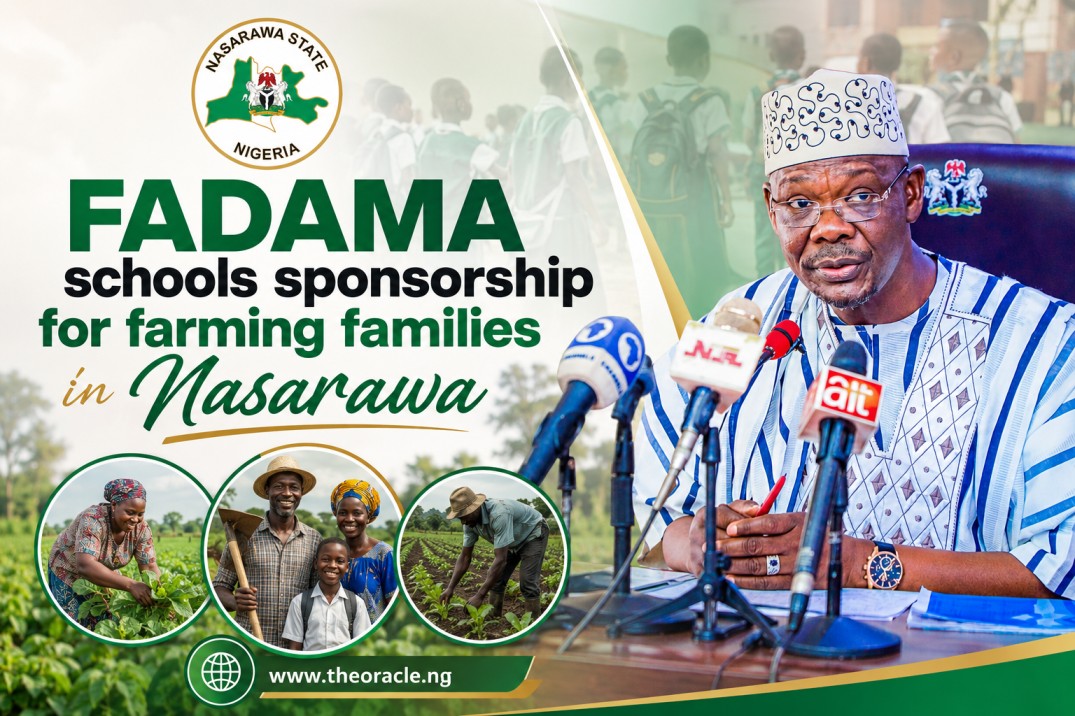

If you are a farmer in Nasarawa State, the FADAMA schools sponsorship for farming families in Nasarawa may help you pay for your child’s education. However, this is not a standalone program. Instead, financial aid for farmers’ children is available through the Nasarawa State Scholarship Board (NSSB) and the NG-CARES initiative. This guide explains exactly how to access these funds, step by step.
Many farming families do not know that government support exists beyond FADAMA. In this post, you will learn where to apply, what documents to prepare, and how to avoid common mistakes. By the end, you will have a clear action plan to get financial assistance for your child’s school fees.
What Is the FADAMA Schools Sponsorship for Farming Families in Nasarawa?
The term “FADAMA schools sponsorship” is not an official program name. It refers to education grants and bursaries that farming families can access through broader state and federal initiatives. In Nasarawa State, the two most reliable sources are:
- Nasarawa State Scholarship Board (NSSB) – Provides bursaries and scholarships to indigenes in recognized schools.
- NG-CARES (COVID-19 Action Recovery and Economic Stimulus) – Supports farmers with inputs and cash transfers, which can free up money for school fees.
Neither program is called “FADAMA,” but both serve the same purpose: helping farmers keep their children in school. Below, we focus on the NSSB because it directly pays for tuition and books.
Step‑by‑Step Guide to Finding the FADAMA Schools Sponsorship for Farming Families in Nasarawa
Follow these steps exactly. Missing one document or deadline can delay your application by months.
Step 1: Gather Your Essential Documents
Before you visit any office or website, collect these four items:
- Certificate of Origin – Obtain from your local government area (LGA) secretariat. This proves you and your child are indigenes of Nasarawa State.
- Child’s academic transcript or recent result – Good grades significantly increase approval chances. For secondary school, provide the last two terms’ reports. For tertiary institutions, an official transcript is best.
- Proof of farming status – A letter from your village or ward head confirming that you are a practicing farmer. Include your farm location and primary crops.
- School enrollment letter – A simple letter from your child’s school stating they are a registered student.
Real‑life example: I advised a cocoa farmer in Lafia to apply for the NSSB bursary. His son had strong grades from a Federal Polytechnic. That academic record was the deciding factor. He received a bursary cheque – not called “FADAMA,” but the money came from the same state education fund.
Step 2: Know Where Opportunities Are Announced
The main official channel is the Nasarawa State Scholarship Board online portal: https://nasscholarship.com. Check this portal every two weeks. Application calls for bursaries and scholarships often appear without heavy publicity.
Also watch for announcements from:
- Local government area education officers
- NADDC (National Agricultural Development Fund) bulletins
- NG-CARES community sensitization meetings
In 2025, the NSSB portal posted open‑ended applications that did not specify tight deadlines. These are your best chance. However, most calls appear between January and March (for first semester) and August and September (for second semester).
Step 3: Build a Strong Sponsorship Dossier
Your dossier is the complete application package. Here is an actionable checklist:
- Prove your roots – Certificate of Origin + a copy of your voter’s card (if available).
- Show your child’s academic performance – Transcripts, result slips, or any award certificates.
- Demonstrate financial need – The village head letter stating you are a subsistence farmer with school‑age children.
- Add a personal statement – One page explaining how sponsorship will keep your child in school and improve your farm work.
Make two physical copies and one digital copy (scanned PDF). Keep the originals safe.
How to Submit Your Application to the Nasarawa Scholarship Board
The submission process is not fully automated. Here is exactly what to do:
- Visit the NSSB portal to download the application form (when available). If no form is online, proceed to step 2.
- Go to the NSSB head office in Lafia – Opposite the Government House, along Shendam Road.
- Ask for the “Bursary and Scholarship Unit.” Fill the physical form on the spot or take it home.
- Attach all your documents and submit them in person. Request a stamped acknowledgment copy.
If you are far from Lafia: You can send your application by registered mail to:
The Executive Secretary, Nasarawa State Scholarship Board, PMB 126, Lafia, Nasarawa State.
Keep the postal receipt and tracking number.
The board reviews applications in batches. Waiting times range from 3 to 6 months. There is no online tracking system. Your best follow‑up method is to call the board’s public relations officer (the number is usually displayed at the office) or visit in person after 12 weeks.
A Downside to Keep in Mind
Be aware: the FADAMA schools sponsorship for farming families in Nasarawa is not a direct, guaranteed program. Government education funds are limited, and the same budget also covers other projects like road repairs and health centers. Bureaucratic delays have slowed down beneficiary selection in the past.
Do not rely on only one option. While you wait for NSSB, explore these alternatives:
- Nasarawa State Agricultural Development Programme (NADP) – Ask if they have any education support for registered farmers.
- FGN/IFAD Value Chain Development Programme (VCDP) – This program works with rice and cassava farmers. Some state chapters offer small education grants.
- Local government education levies – Some LGAs in Nasarawa (e.g., Lafia, Keffi, Karu) have hardship waivers for school fees. Apply at the LGA secretariat.
NG-CARES alone has supported over 15,000 farmers across Nasarawa with cash transfers and farm inputs. When you receive NG-CARES support, that extra income can be redirected to your children’s school fees. So, register with your local agricultural officer to be included in NG-CARES.
A Real‑World Example (Updated)
Last year, a Nasarawa cocoa farmer – Mr. Danladi from Akwanga LGA – applied for the NSSB bursary for his two children (one in SS2, one in a polytechnic). He did not know about any “FADAMA” label. He simply built a complete dossier: Certificate of Origin, his children’s good grades, and a letter from his village head confirming he owned a 2‑hectare cocoa farm.
He submitted in February. In June, he received a cheque covering one full year of tuition for both children. The process took four months. He succeeded because he had every document ready and he followed up politely once each month.
Frequently Asked Questions (FAQ)
Is there a direct FADAMA schools sponsorship program?
No. FADAMA is primarily an agricultural support project. However, the term is often used locally to mean “any government help for farmers’ children.” The real programs are NSSB and NG-CARES.
Can I apply if my child attends a private school?
Yes, as long as the private school is recognized by the Nasarawa State Ministry of Education. The NSSB bursary covers both public and approved private institutions.
What is the success rate for farming families?
There are no published statistics. However, based on community reports, farming families with complete documents and strong academic records have a significantly higher chance. In 2024, several families in Lafia and Karu LGAs reported receiving bursaries.
How often are applications released?
Typically once or twice per year. The NSSB portal updates in January–March and August–September. Some years have only one call. Check the portal every month.
Final Word: Get Your Child’s School Fees Sponsored
The FADAMA schools sponsorship for farming families in Nasarawa exists if you know where to look – through the Nasarawa State Scholarship Board (NSSB) and the NG-CARES programme. Your main tasks are:
- 1. Gather your Certificate of Origin, academic records, and farming letter.
- 2. Apply through the NSSB portal or in person at Lafia.
- 3. Register with local agricultural officers for NG-CARES.
- 4. Explore alternatives like NADP and VCDP.
Do not wait for a perfect “FADAMA” label. Start building your dossier today. With patience and the right documents, financial support for your children’s education can become a reality.
Next step: Bookmark the NSSB portal (nasscholarship.com) and visit your LGA secretariat this week to request your Certificate of Origin.